

Hellspin casino Plinko game
Introduction
When I look at Hellspin casino Plinko, I see a format that seems almost too simple at first glance. A ball drops from the top of the board, hits a field of pegs, changes direction again and again, and finally lands in a slot with a specific multiplier. That is the whole visual idea. Yet in practice, Plinko creates a very different kind of casino session from what many players expect when they come from slots, roulette, or crash-style products.
For players in New Zealand, the appeal of Plinko is easy to understand. It is fast, transparent on the surface, and visually readable even for someone who has never touched the format before. You do not need to learn paylines, bonus rounds, card values, or wheel sectors. But that simplicity can be deceptive. The interface is minimal, while the real experience depends heavily on risk level, board setup, multiplier distribution, and the pace at which you choose to release balls.
That is why Plinko deserves a closer look. On the Hellspin casino page built around this game, the key question is not whether the layout looks entertaining. The real question is what the player is actually getting into: what kind of rhythm the game creates, how outcomes are structured, where the tension comes from, and why two sessions that look identical on screen can feel completely different in terms of bankroll pressure and emotional swings.
In this review, I will focus strictly on the game itself. I will explain how Plinko works, why it attracts attention, what it offers in practical terms, and where caution matters more than the clean design suggests. When the support team feels slow, Hellspin Casino Aviator crash game guide before choosing a real money casino explains the fastest ways to reach them.
What Plinko Is and Why It Draws So Much Attention
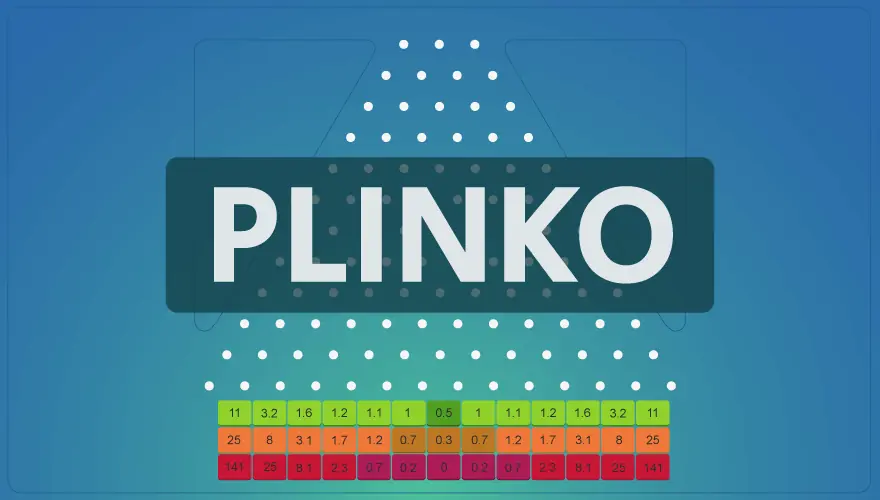
Plinko is a chance-based casino game built around a vertical board filled with pins. The player sets a stake, often chooses a risk level, and drops a ball from the top. As the ball bounces left and right through the peg field, it eventually lands in one of several payout slots at the bottom. Each slot corresponds to a multiplier. Lower multipliers are usually concentrated toward the center, while higher returns tend to sit closer to the edges and appear less often.
The reason this format stands out is not just its visual clarity. It is the combination of instant resolution and visible randomness. In a slot, the result is hidden behind spinning reels and symbol combinations. In Plinko, the path unfolds in front of you. You watch the ball hesitate, drift, rebound, and sometimes move toward a high-value edge pocket before bouncing back into an ordinary zone. That short sequence creates suspense in a very direct way.
I think this is one of the most important things to understand about Hellspin casino Plinko: the game does not rely on narrative features or layered bonus design. Its attraction comes from anticipation compressed into a few seconds. The player sees enough movement to feel involved, but not enough control to believe they can direct the outcome. That balance is exactly what keeps many people engaged. The full picture of payment methods lives in best Hellspin Casino returning player bonus codes, including the less common ones.
Another reason Plinko became so noticeable is that it works well in short sessions. You can drop one ball and stop. You can run ten quick rounds. You can also accelerate the pace and turn the session into a rapid sequence of outcomes. That flexibility makes the game accessible, but it also increases the risk of underestimating how quickly variance can affect your balance.
A useful observation here is that Plinko often feels fairer to casual players than many other casino games, simply because the result is shown as a physical-looking path rather than a hidden calculation. That feeling should not be confused with actual predictability. The board looks readable; the outcome distribution is still governed by probability.
How the Plinko Mechanic Actually Works in Practice
At the core of Plinko is a simple process: choose your bet, select the board settings available, release the ball, and wait for the final landing position. But once I move past that basic description, the practical structure becomes more interesting.
The ball starts at the top and encounters a series of pegs. Each contact sends it slightly left or right. Over many rounds, this creates a distribution where central slots are hit more often and outer slots less often. That is why the bottom row is usually designed with modest multipliers in the middle and larger multipliers near the edges. The farther the reward is from the center, the lower the chance of reaching it.
Most versions of Plinko also include configurable risk levels. This setting changes how aggressive the payout table is. On lower risk, the multiplier spread is flatter. You usually see more frequent modest returns and fewer dramatic spikes. On higher risk, the center can become less forgiving relative to the rare top-end values sitting at the edges. In plain terms, the board becomes harsher between big hits.
That setting matters far more than many new players realise. Two sessions on the same game can produce completely different emotional and financial patterns depending on whether low, medium, or high risk is selected. The visual action remains almost identical. The bankroll behaviour does not. If bonuses are what you care about, Hellspin Casino safety information for players checking casino terms breaks down every offer currently running.
| Element | What it means on screen | What it means for the player |
|---|---|---|
| Ball drop | A single round begins instantly | Fast result cycle, easy to repeat bets quickly |
| Peg collisions | The ball changes direction multiple times | Creates suspense, but not player control |
| Bottom multipliers | Different payout values across the row | Central outcomes are more common, edge outcomes are rarer |
| Risk level | Changes multiplier distribution | Directly affects session volatility and bankroll pressure |
| Auto or rapid drops | Speeds up repeated rounds | Can turn a light session into a high-spend run very quickly |
One detail I always point out is that Plinko gives players a stronger illusion of “almost” outcomes than many reel-based products. When the ball drifts toward a high multiplier and bounces away at the last peg, it feels meaningful. Mathematically, it is simply part of the random path. Psychologically, it is powerful. That is one reason the game can be more gripping than its spare design suggests.
Why the Session Rhythm Feels So Different From Other Casino Formats
The rhythm of Plinko is one of its defining strengths. A round usually resolves in seconds. There is no long animation sequence, no waiting for bonus entry, and no need to interpret symbol combinations. You place the stake, watch the drop, and get the result. This gives the game a clean tempo that many players find refreshing.
On Hellspin casino, this kind of pace can be attractive to players who want direct action without the visual noise of modern slots. But speed is not automatically an advantage. A fast cycle means your decisions matter more in terms of session control. If you increase the stake and run repeated drops, the balance can move sharply in a short time, especially on a higher-risk setup.
I would describe the tempo of Plinko as deceptively calm. The screen is simple. The rules are simple. The result arrives quickly. Yet the emotional rhythm can become intense because every round contains a visible moment of suspense. Unlike roulette, where the ball movement is familiar and detached, Plinko keeps the eye fixed on a tiny object that seems to fight its way toward one side of the board. That creates a compact but effective tension loop.
There is also no natural pause built into the experience. In many slots, bonus anticipation or feature transitions create a break in rhythm. In Plinko, one round ends and the next can begin almost immediately. For disciplined players, that is convenient. For impulsive players, it can be a weak point.
A memorable practical point: Plinko often feels slower emotionally than it is financially. The ball takes a few seconds to fall, so the session seems measured. But if you are dropping repeatedly, the spend rate can still be high. That mismatch catches some players off guard.
Understanding Probability, Risk Levels, and Real Outcome Patterns
Before trying Hellspin casino Plinko, the player should understand one core fact: this is a probability distribution game, not a pattern-reading game. The board may look physical, but there is no reliable way to track where the next ball “should” go. Previous drops do not create a due result. A sequence of central landings does not make an edge hit more likely on the next round.
The payout profile is shaped around frequency versus upside. Lower multipliers tend to appear more often. Higher multipliers are usually rare by design. That is the trade-off that defines the experience. If the board offers a chance at a very large return, it will generally do so by making long stretches of ordinary or losing outcomes more common.
Risk settings sharpen this trade-off:
- Low risk usually means tighter payout spread, more stable sessions, and fewer dramatic swings.
- Medium risk tends to balance regular smaller returns with occasional stronger hits.
- High risk often means sparse top-end outcomes surrounded by many low-value results.
What matters in practice is not just the theoretical maximum multiplier, but how often the board returns something meaningful relative to your stake. Many players focus on the headline number and ignore the route required to get there. That is a mistake. A huge edge multiplier may be visually exciting, but if the board is set aggressively, your session may consist mostly of low-return drops while you chase a rare event.
This is where Plinko can surprise inexperienced users. Because the rules are easy to grasp, some assume the experience is gentle. In reality, the board can be quite punishing under certain settings. The game is easy to understand, but not always easy to manage.
Who Plinko Suits and When It Can Become a Poor Match
Plinko suits players who enjoy short, self-contained rounds and do not need layered storytelling or bonus features to stay engaged. If you like seeing an outcome unfold visually and prefer a stripped-back interface, this format can be a strong fit. It also works for players who want flexible session length. You can test it lightly with small stakes, or you can run a more active session if that matches your style.
It is especially suitable for players who:
- Prefer direct results over long feature cycles.
- Understand that visible motion does not equal control.
- Can manage stake size carefully in fast sessions.
- Enjoy variance as part of the entertainment rather than as a frustration trigger.
At the same time, Plinko may not suit everyone. If you want strategic decision-making beyond stake and risk selection, the format can feel thin. If you enjoy the depth of blackjack, the social dynamic of live tables, or the layered structure of modern slots, Plinko may seem repetitive after a while. The game is built around a narrow but focused loop.
It can also be a poor match for players who react strongly to near misses. Plinko generates many visually suggestive moments where the ball appears close to a high multiplier before turning away. If that kind of outcome encourages chasing behaviour, a slower or more structured format may be a better choice.
That is one of the more honest conclusions I can draw: Plinko is not shallow, but it is narrow. Its strength lies in doing one thing well. If that one thing clicks with your preferences, the game can be genuinely compelling. If not, the simplicity may wear thin faster than expected.
What to Know About Session Flow, Bankroll Pressure, and Expectations
Any player considering Hell spin casino Plinko should think about session flow before the first drop. Because rounds resolve quickly, bankroll management matters more than the stripped-down design suggests. A small stake can make the game feel smooth and exploratory. A larger stake combined with rapid drops can change the tone immediately.
There are three practical expectations I recommend setting in advance:
First, expect uneven short-term results. Even on a lower-risk board, returns will not arrive in a neat pattern. The game can produce clusters of similar outcomes and then break that rhythm without warning.
Second, do not interpret visual movement as evidence of momentum. A ball that repeatedly lands near the center does not signal that an edge outcome is building up.
Third, understand that a rare high multiplier can dominate how a session feels in memory. Players often remember the one dramatic hit or the repeated near-edge bounces, while forgetting the ordinary base pattern that defined most of the run.
This memory effect is especially important. Plinko compresses excitement into a small visual event, so standout moments feel larger than they are statistically. That can distort judgment about how the session actually performed.
| Player expectation | Reality in Plinko |
|---|---|
| “The board looks simple, so the session should be easy to control.” | Control is limited mainly to stake size and risk setting; outcomes remain highly variable. |
| “If I keep missing the edge, a big result may be close.” | Past drops do not make rare outcomes more likely on the next round. |
| “A quick game means lower exposure.” | Fast rounds can increase exposure if repeated without a clear limit. |
| “High multipliers define the experience.” | The everyday pattern of smaller results usually defines the actual session. |
How Plinko Differs From Slots, Roulette, and Other Common Casino Games
Plinko sits in an unusual place among online casino products. It shares some DNA with slots because it is fast, automated, and built around multipliers. But it lacks reels, paylines, symbol hierarchies, free spins, and bonus narratives. It also shares some surface similarity with roulette because the player watches a moving object settle into a final position. Yet roulette is built around a wheel with fixed bet types, while Plinko is more about distribution across a board and the tension of repeated deflections.
Compared with classic slots, Plinko is far more transparent in presentation. You can see the entire route from start to finish. There is less visual clutter and less interpretive work. That makes it approachable, but it also removes the layered progression many slot fans enjoy.
Compared with table games, Plinko offers less strategic depth. There is no decision tree like blackjack, no betting map like baccarat side wagers, and no social tempo like live dealer formats. The trade-off is immediacy. The game gets to the point quickly.
Compared with crash games, Plinko feels more tactile and less binary. In crash, the player often makes a timing decision about cashing out. In Plinko, the tension comes from the path itself rather than a stop-point decision. For some players, that makes the experience less mentally demanding. For others, it removes the sense of agency they want.
In short, Plinko stands apart because it turns probability into a visible journey. That is its identity. It is not trying to be a slot with a different skin. It is a separate rhythm with its own strengths and limitations.
Practical Strengths and Weak Points of the Format
After analysing the structure of Hellspin casino Plinko, I think its strengths are clear, but so are its boundaries. This is not a game that hides what it is. The question is whether the player understands what that means in use.
Main strengths:
- Immediate clarity. New players can understand the basic idea within seconds.
- Strong visual suspense. The ball path creates anticipation without needing complex animation.
- Flexible pace. The format works for brief sessions and for repeated rapid rounds.
- Meaningful risk customisation. Risk settings can materially change the feel of the session.
- Low interface friction. The game gets started quickly and stays easy to follow.
Main limitations:
- Limited depth. Beyond stake and board settings, there is little player input.
- Potential for repetitive feel. If the core loop does not engage you, the format can flatten out fast.
- Fast bankroll drain under aggressive play. Quick rounds can magnify poor discipline.
- Near-miss tension can be misleading. The visual path may encourage emotional decision-making.
- High-risk modes can be harsher than they look. The simple design can mask sharp variance.
One of the most useful observations I can add is this: Plinko often gives players a cleaner experience than slots, but not necessarily a softer one. Cleaner interface, yes. Gentler session profile, not always. That distinction matters.
What I Would Check Before Launching Plinko on Hellspin casino
Before starting a session, I would focus on a few practical checks rather than diving in based on the board’s simple appearance.
- Review the risk setting first. This has a larger impact on session behaviour than many players expect.
- Look at the multiplier spread. Do not focus only on the maximum number; consider how the rest of the row is structured.
- Set a session limit. Because rounds are short, it helps to define spend and time boundaries in advance.
- Start with a modest stake. This is the easiest way to understand the rhythm without adding unnecessary pressure.
- Use demo mode if available. It is a practical way to see how different board settings feel before risking real money.
I would also pay attention to how the game affects your decision-making after a few rounds. If you find yourself speeding up because the board “looks close” to a better result, that is a sign to slow down. Plinko is at its best when treated as a controlled probability game, not as something that can be read or nudged through intuition.
For New Zealand players especially, where game choice often comes down to personal style rather than sheer novelty, this matters. Plinko is not difficult to learn. The real skill is recognising whether its pace and variance profile fit your habits.
Final Verdict
Hellspin casino Plinko offers a focused and visually clear gambling format built around one simple action: drop the ball and watch probability take shape in real time. That is the essence of the experience. It does not try to compete with slots through feature overload, and it does not imitate table games through strategy. Instead, it delivers short rounds, visible suspense, and a session flow that can be either light and controlled or surprisingly intense depending on the chosen risk level. Before you make a deposit, it is worth reading Hellspin Casino bingo for online casino players for the fee and speed details.
Its biggest strengths are accessibility, speed, and the way it turns randomness into something the player can actually watch unfold. Its weaker side is the narrowness of the loop. If you want depth, layered progression, or meaningful tactical choices, Plinko may feel limited. If you underestimate how strongly risk settings shape the session, the game can also feel harsher than its minimal design suggests.
My honest conclusion is that Plinko is worth trying for players who appreciate direct action, clear presentation, and short-form suspense. It is less suitable for those who need strategic involvement or who are easily drawn into chasing visually dramatic near misses. In other words, the game can be an excellent fit, but only for the right expectations.
What Plinko really offers is not complexity. It offers concentration. A few seconds of motion, a fast result, and a very clear reminder that simple casino formats can still produce sharply different outcomes. That is exactly why some players keep coming back to it, and why others decide after one session that they would rather play something with a broader structure.
FAQ
How does Plinko work in the real-money mode?
A ball drops from the top, bounces off the pegs, and lands in a scoring slot. Each landing position is linked to a multiplier, so the same stake can produce different results. Real-money play uses your account balance, not demo funds.
What does the multiplier mean during Plinko ball drops?
The multiplier is the value applied when the ball lands in a specific slot. Higher multipliers are typically associated with fewer landing outcomes. The multiplier determines the winnings or the impact on the outcome for that round.
Is the Plinko demo mode available if a player wants to practice first?
The demo mode lets a player run Plinko rounds without using real-money funds. It mirrors the ball-drop mechanics and helps test timing and betting flow. When ready, switching to real-money play uses the standard casino login account balance.
Which steps are needed to launch Plinko after logging in?
Log in to the casino account first, then open the game lobby or Plinko section. Select the stake amount for the round and press the play action to start the ball drop. If a warning shows, check whether the account is verified and eligible for real-money play.
Does Plinko have a different risk level compared with lower-volatility casino games?
Plinko rounds are designed around chance and multiplier outcomes, which can feel higher-variance than some slower-paced games. The risk perception depends on how often the player increases the stake or runs long sessions. Keeping stakes steady helps manage how quickly results can swing.
What happens if a Plinko round is interrupted before the ball lands?
If the connection drops during a round, the table status may need to refresh before the result is shown. Avoid restarting repeatedly during the same outcome window, as it can confuse the display. After reconnecting, check the balance and round history to confirm the latest result.
Can a mirror or working mirror be used if the Plinko game doesn’t load?
Hellspin provides access alternatives such as mirrors when the main site is unavailable. Using a working mirror can restore access to the Plinko game lobby and account login. After switching, log in again if prompted and confirm the game tile opens correctly.
What common beginner mistake happens with stake selection in Plinko?
A frequent issue is changing the stake too fast without understanding how multipliers can swing. Another mistake is attempting to chase a recent outcome by increasing stake after a bad run. Starting with a modest stake and sticking to a plan helps keep sessions controlled.
When is a bonus code or promo code relevant for Plinko sessions?
A bonus code or promo code is relevant only if the promotional conditions specify coverage for casino games or the player’s account. The promo panel or cashier area usually confirms whether the offer is activated and which activities it supports. Checking that confirmation before starting Plinko helps align the session with the promo rules.